


Meejin Hong
On vimeo, you describe yourself as an animator and artist. Please tell us a bit about your background in drawing and animation
I knew I wanted to be an artist since I was 8 years old. In their early days, my mom was an artist and my dad was a classical guitarist, so they always supported my ambitions. For undergraduate studies, I went to Cornell University where I received a very formal fine arts education. I majored in printmaking because I loved the process. It was laborious and layered with a sweet balance of control and unpredictability. After school I worked in print shops all over New York City as an educator and master printer’s assistant while continuing my own practice of creating etchings, woodcuts, and monotypes.
This experience no doubt primed me for animation. In printmaking, “proofs” or test prints were made to evaluate the current state of an image. By placing the proofs in sequential order, the image slowly revealed itself like frames in an animation. I began to see how these two mediums were not that different. They were both obsessive and repetitive and required a lot of patience. To pursue this transition from still to moving image, I entered the experimental animation graduate program at CalArts where I did not need a background in animation. It was open ended, artist driven and a place where I could learn new methods of expression while continuing to utilize all the skills I loved most: drawing, painting, sculpting and printmaking.
What was your starting point for DELUGE? Did you have an idea of the forms and shapes you wanted to animate or did they evolve from pure improvisation? Did you already know that you wanted to fill the entire page until it was covered with lines completely?
One day at CalArts, animator Jim Trainor taught a workshop on the infinite animation technique. It wasn’t until years later when the perfect opportunity to delve into the process presented itself. I was invited to be a part of a collaborative event where artists, musicians and meditation facilitators interpreted the theme of regeneration. Although I didn’t have any concrete ideas of what to animate at the start of the project, I had a filled sketchbook and an appetite for experimentation. For the event, around 2 minutes of animation were screened on a loop with live music improvised alongside it.
I felt confident with the process at this point but knew the project was worth continuing only if I animated the page to black. This did not seem like a novel idea but in fact what the medium itself wanted if pushed to the extreme. If I had not made DELUGE, there is no doubt another artist would have come to the same conclusion.
Could you describe the technical working process of DELUGE (if I am not mistaken: analogue animation, pencil on 24 sheets of paper …photographed or scanned? And: usually I don’t ask this, but in this case: how long did you work on this film?)
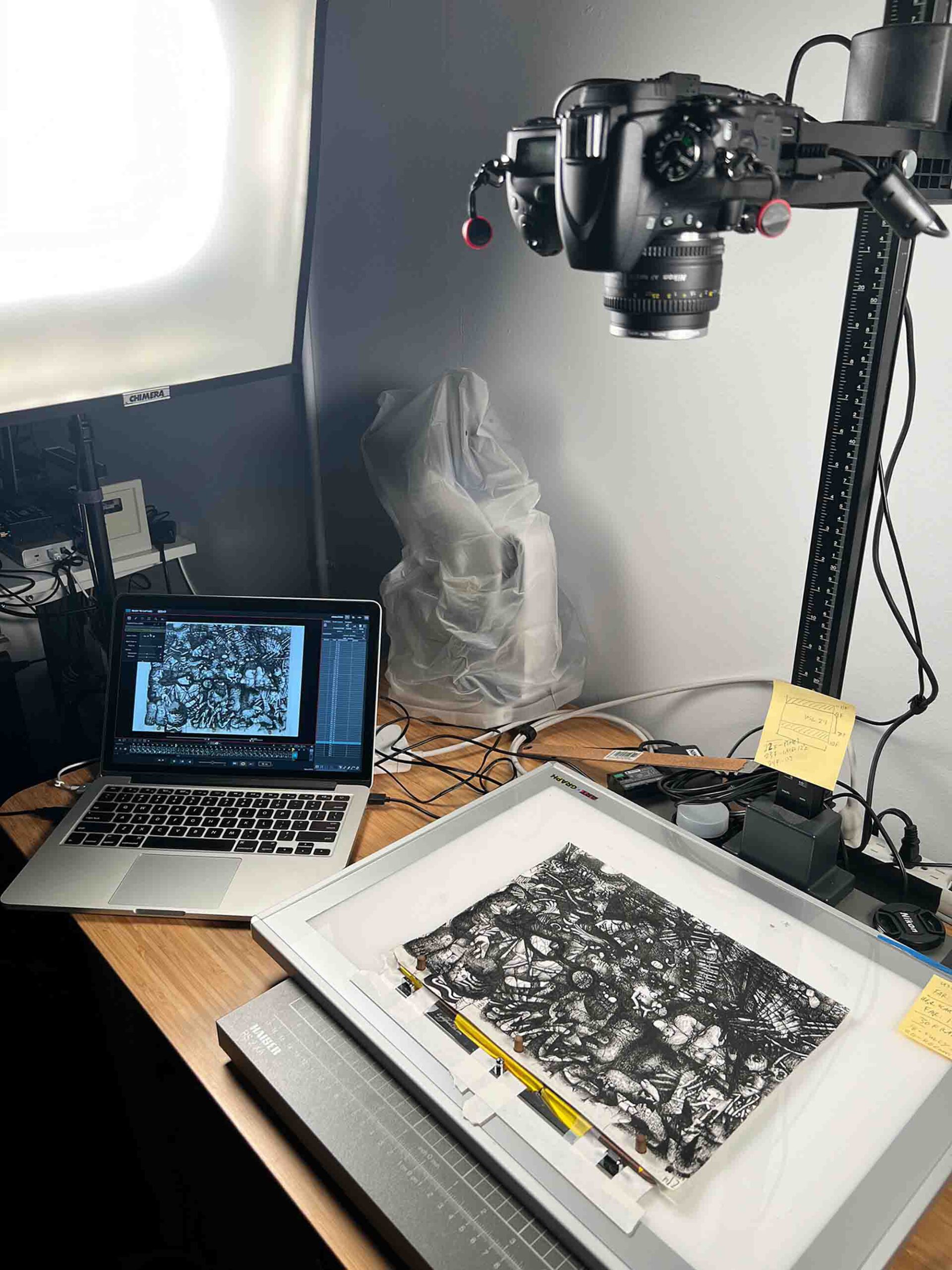
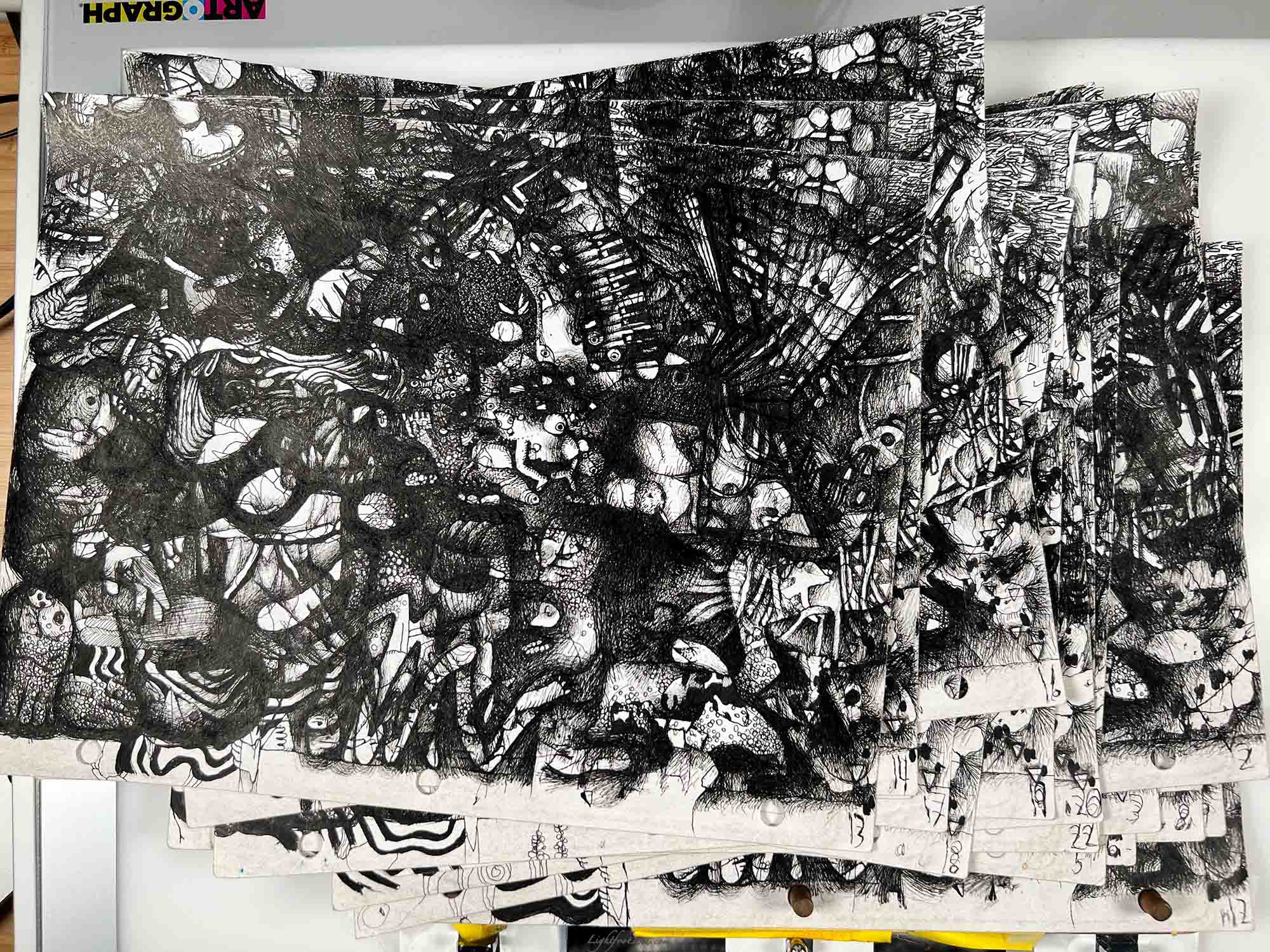
DELUGE was created using the infinite animation technique which was pioneered by Adam Beckett in the 70’s during his studies at CalArts. It was constructed from twenty-four drawings on 8.5”x11” paper and an India ink pen to resist the temptation of erasure. Each drawing was photographed, added to, then re-photographed again. Because of the limited number of frames, this method of animating formed a loop that continuously evolved with each iteration of the drawings. With no possibility of changing the past and not much hope for predicting the future, this direct and immediate approach encouraged being in the present moment.
The film was completed over a span of 8 years with lots of breaks in between. I used the stop motion program, Dragonframe, to capture the frames on a down shooter. It was quick and simple with immediate playback that was crucial in keeping the momentum going especially when the imagery became more and more dense.
What are you relating to when you are drawing?
Drawing is my trusted companion. I draw from life, memory, art, imagination, the gut. At its purist, it should feel free and untamed. When I get stuck, I start with something outside of myself like a spill or blob. This allows me to create something beautiful out of what already exists while the unconscious seeps its way in.
Is there a difference for you between drawing and animating?
Drawing and animating are not that different. They are the preferred tools I have at my disposal that help me work out a thought. In general, everything starts with a drawing. With certain ideas, however, going directly to sequential imagery is more spontaneous.
How would you then describe your film DELUGE? Is it a drawn animated film or rather a drawing in motion?
I would describe DELUGE as a drawing in motion. It was an experiment in seeing how far I could push the image. To achieve this, the image was in a constant state of transformation. As the drawing expanded within the confines of the frame, elements simultaneously competed for space and created their own interdependent balance. It became a dance that brought hope in finding some sort of resolution through the pandemonium. Ultimately, the drawing exhausted itself into darkness, transmuting chaos into calm.
Why did you choose analogue techniques, e.g. what do you like about the materiality of the tools?
Physical materials have so many variables and subtle nuances that teach me more than clean flat digital marks. When I hear graphite travel across textured paper, my brain melts. Encountering charcoal dust that is smeared by my careless finger invites surprise and imperfection. With software, there is a correct, necessary order of things that feels restrictive and interruptive. I want to be able to create anywhere at any time with nothing but a mark making tool and a surface. To me, this makes the process and kinship to the outside world all the more human.
I am very curious about how you developed the rhythm in DELUGE. There are “beings” that cross the entire page and others which move on the same spot, some that emerge and disappear, leave the frame, dissolve or explode. How did you “direct” them? Did you develop the ideas on the paper through the drawing process or was there some planning involved at some point?
In the beginning I tried to plan how things were going to land and influence one another, but it never worked. I started over three times before letting go and just allowing the process and imagery to guide me. Although I didn’t know what the film was about, I knew I wanted the eye to wander naturally from one element to the next without direction. With every new cycle, I had a better understanding of what was needed. Playing around with a variation of movements to fill the frame allowed the rhythm of the film to develop organically.
Can you put into words what DELUGE depicts?
DELUGE was a response to personal and global events that occurred during the eight years it took to complete and beyond. It began with my marriage and concluded weeks after the genocide of Palestinians reached its height after October 7th. In the middle there were trials of miscarriage and birth, a global pandemic, an awakening to racial inequality with the death of George Floyd, and so much more. The joy, confusion, sadness, love and rage all found their way into the film.
It became a meditation on how one carries all of these things that are felt, experienced and witnessed. While some lingered in the foreground, others got pushed out of sight. At times tears flowed so freely while hovering over the frames that it was a surprise the ink never bled. If it had, it would have been another challenge to overcome. Because the ethos of the film was so deeply rooted in its creation, this intuitive, straight- ahead approach felt optimistic like a way of moving forward.
Animated films are often considered as something which involves a lot of planning, time and precision to get the forms moving in the “right way”. What do you personally think, how much craftsmanship, planning and precision does animation need?
Animation employs a unique logic where everything is constructed from the outset making it vastly different from live action. While it can be more challenging to capture an audience, I don’t think it necessarily has to be precise or meticulously planned. What’s important is establishing a consistent language that one can grab onto. The beauty of animation is that it is limitless in the way it is created and in the way it is perceived. While getting forms to move in the “right way” may make it easier for one to suspend their disbelief, animation can also be instinctual and messy while maintaining truth within an impossible world.
Do you follow any rules of traditional animation (e.g. the twelve principles of animation)? Do you consider them as helpful or restrictive?
Learning the rules of traditional animation came in a very roundabout way. It was touched upon in the experimental animation program but not required. It wasn’t until working professionally and embarking on Deluge that I began to understand the value in the twelve principles. It is not something I feel beholden to but when I’m able to utilize them successfully, it still feels like magic. What excites me most about learning these rules, however, is the possibility of rebelling against them in an extraordinary way.
Did your drawing style change through animating?
Actually, I’m always trying to get my drawing style to change through animating. When I start a new project, the same mantras play in my mind: keep it simple, keep it loose, and don’t think too much. Inevitably my mind wanders but these words never fail to repeat themselves.
How do you work on the dramaturgy of a film? What aspects do you pay attention to in the course of the film and when do you consider a film as “finished”?
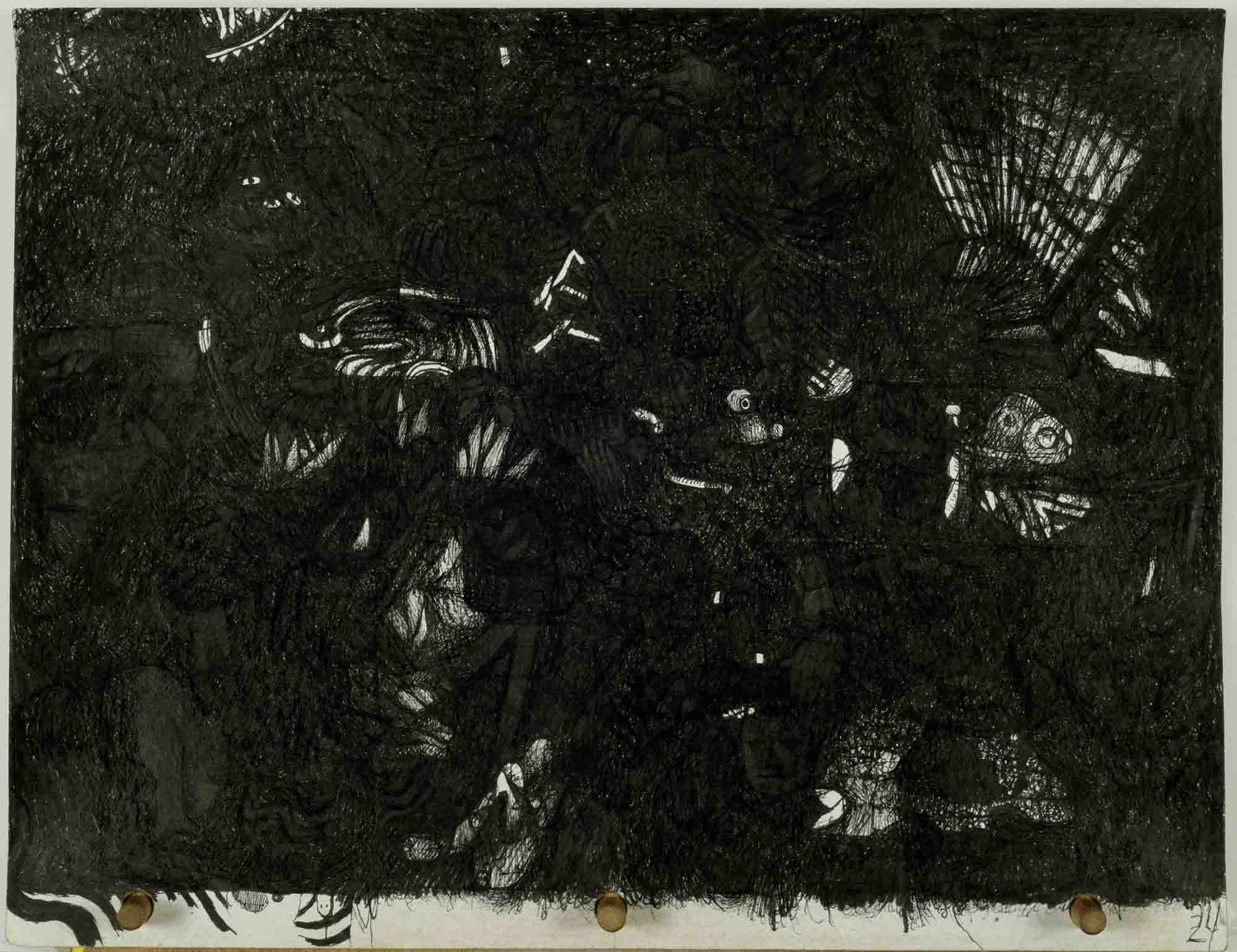
In truth, DELUGE is the only film in my small body of work that feels complete. The structure is simple. It is a system that tests its own limits. It has a clear beginning and a clear end. In its journey from blank page to black filled frame, it’s almost irrelevant what happens in between. By its own nature, the system becomes so relentless and unsustainable that the only logical way out is through self annihilation. In its destruction, however, the history of the marks persist serving as a deep foundation to build anew.
Which significance does animation have within your drawing practice (or vice versa)?
Everything starts with a drawing. I go through phases where I do nothing but draw. Then, when the explosion settles, I go back and see what motifs connect. These are the ideas I want to move.
For DELUGE, an arsenal of sketchbooks new and old were crucial to making the film. Because of the sheer number of disparate cycles, I would often get burnt out on ideas. I’d look through old sketchbooks and find things that were forgotten but still relevant. These moments of discovery were validating and encouraged me to continue.
After about three minutes of DELUGE, I had a baby and took at long hiatus from animating. During this time, I kept a sketchbook at my bedside and drew whenever I could. Usually it would be quick in the midst of complete exhaustion at three in the morning. These braindead expressions kept me sane and ultimately became the driving force of the film: raw imagery that came from the heart and body.
Drawing is a very simple and direct act, whereas animation requires a complex film- technological setup. Do you feel restricted by this aspect in any way? Is there any stage of production that you’d rather like to skip, simplify or to hand over to someone else?
As a process driven artist, I sincerely enjoy every aspect of animation production. The technological setup is like a stretch that eases me into creation. Although some of it may seem boring or painstaking, it’s meditative for me. I get lost in the repetition and enter a flow state. When I engage in each part of the process, it informs and enriches the next.
In saying this, however, I want to add that I’m always trying to find new ways of relinquishing control. Instead of simply handing over an aspect of production to someone else, I hope future projects can involve more collaborative efforts that feed off of each other.
Would you consider animating digitally and if so, what impact does this have on the process / the outcome?
Sometimes I animate digitally for commercial work, and it exercises my brain in a very different way. Although it goes against my ideals, I treat the computer as just another tool to explore. For me, it can be exciting when it is used not merely as a tool to mimic hand processes or to produce more efficiently, but as one that exploits its own unique characteristics and challenges. Even so, it’s uncertain if I’ll ever make a personal film entirely in this way. I like having the balance of both worlds.
How important do you consider the audio part of a film and at which point of the production do you usually start to involve sound and music?
Image and sound are equally important as they should complement each other without competition. Thus far, audio production has come last in my films. I don’t necessarily prefer it this way, it’s just how it has panned out.
For DELUGE, I actually started exploring sound with a friend when I had about 4 minutes of animation. I had a general idea about the arc of the soundscape but little of what it should convey. Those first sessions were funky and energetic but proved all too overwhelming. The creation of imagery was already so physically and emotionally demanding that adding sound to the mix was debilitating. Although it didn’t make sense to work on the audio until the drawings were completed, these initial attempts got the wheel turning and illustrated how drastic sound could manipulate the reception of the piece.
Are there artists or art movements that you relate to or that you take inspiration from?
Throughout my art practice, I have always felt aligned with the Surrealists who put their trust in dreams and the unconscious. When my journey into animation began, Jan Svankmejer was one of the first animators I learned about, and soon after, the first I had the privilege of hearing speak in person. He was a master draftsman who explored the complexities of the human condition in such a strange, powerful way. His singular vision was macabre but playful taking much inspiration from the unfiltered imagination of childhood. The tactility of his work gave me comfort and a cosmos of possibilities.
There is often a question unanswered while working on a film which then becomes part of a following project idea. Are there new project ideas on the horizon?
Well, I thought I was done with loop experimentation, but then, I had a dream 🙂 It’s a conceptual idea where I’m essentially breaking down one simple short animated loop and expanding on each frame of the loop. Each frame will have its own animation independent of all the other frames. The challenge is to see what happens when everything is put back together again. It will probably be ugly, a bit too much or maybe something interesting to ponder. Nonetheless, it’s a mystery I have to at least try and solve.
Aside from that plus other ideas that are brewing, I have a project that is in stark contrast to my last film. Because DELUGE completely depleted my mind and body to the point that I vowed to quit animation, this project focuses on the joys of childhood. With home recordings of my daughter that I have collected over the years, sound and image are intertwined in a wholly collaborative way from the beginning and will influence each other til the end.
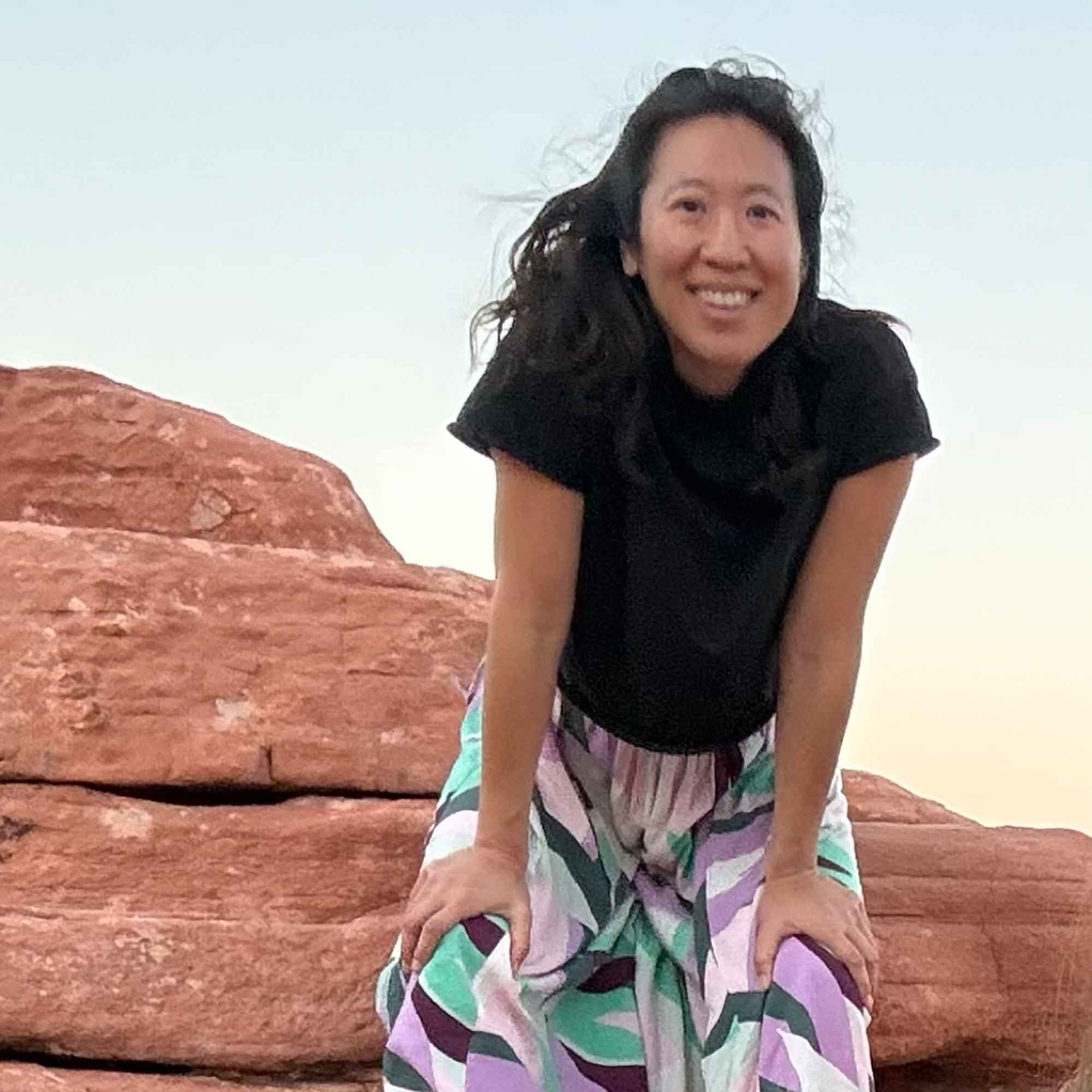
Meejin Hong Meejin Hong is an experimental animator from Spartanburg, South Carolina. She is part of the team of post-disciplinary artists at Electronic Countermeasures, LLC. She currently resides with a creep of tortoises and other unruly creatures in Winnetka, CA.